
Access Control for Water Utilities – Secure Access to Pump Stations and Facilities
Meet NIS2 and CER requirements with digital access control for water utilities. Traceable access to pump stations, reservoirs, and technical rooms.
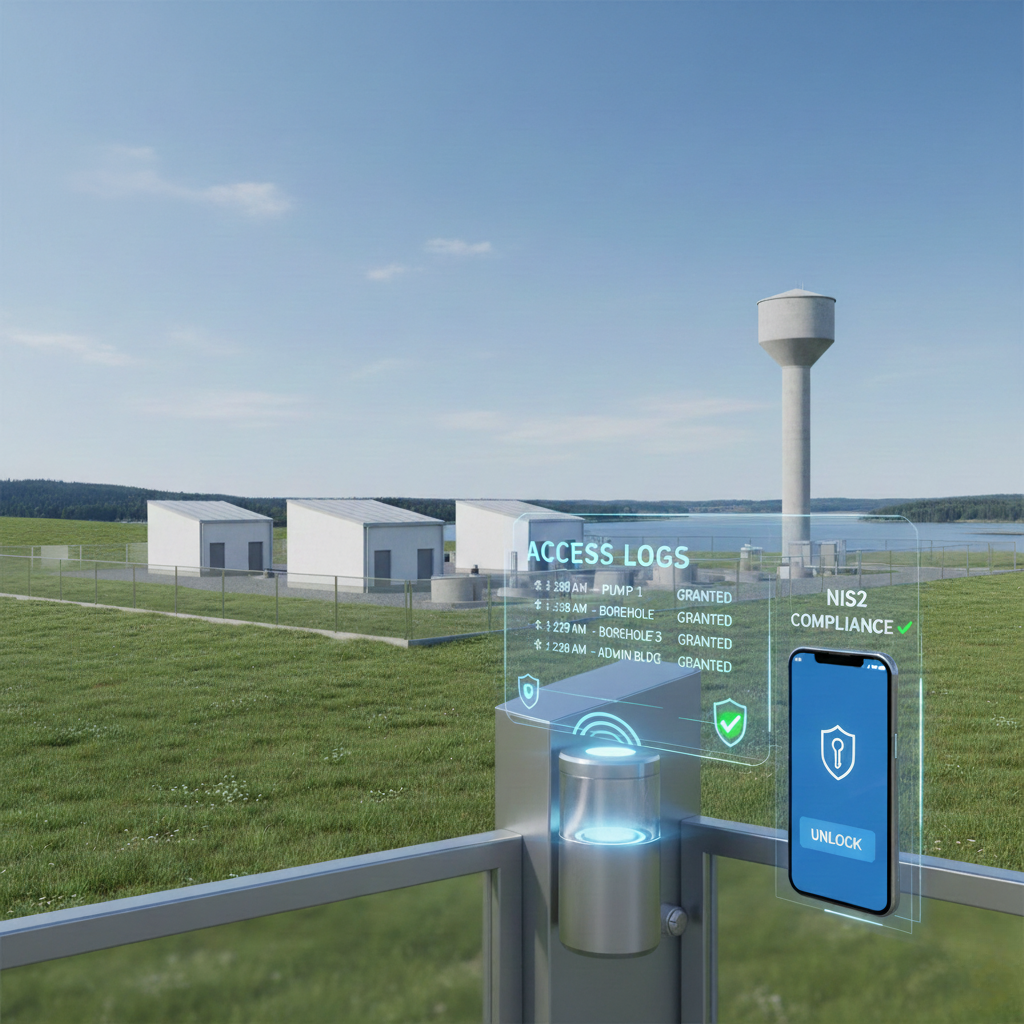
Water utilities are classified as critical infrastructure under the CER Directive and NIS2. This means enhanced requirements for documenting who has access to your facilities.
With SnapKey, you get traceable access to all locations – from pump stations to clean water reservoirs.
Challenges for Water Utilities
❌ Many distributed locations: Pump stations, wells, reservoirs, technical rooms ❌ Off-grid facilities: No power or internet at many locations ❌ External technicians: Consultants, contractors, sample collectors ❌ Compliance requirements: NIS2 and CER require documentation ❌ Key circulation: Who actually has a key to what?
SnapKey + iLOQ for Water Utilities
Battery-free Locks
iLOQ S5 is powered by smartphone NFC. No batteries, no maintenance.
Works Offline
The lock validates the key locally. Perfect for pump stations without connectivity.
Automatic Access Log
Openings the lock system reports are logged with timestamp, person, and location.
Time-limited Access
Give sample collectors or contractors access only for the necessary time period.
Typical Locations Secured
| Location | Risk of Unauthorized Access | SnapKey Solution |
|---|---|---|
| Clean water reservoir | Drinking water contamination | Traceable access, 2FA option |
| Pump station | Operational disruption | Time-limited access |
| Well | Water extraction | Offline access with logging |
| Technical room | Control systems | Role-based access |
| Chemical storage | Chemical handling | eID verification |
NIS2 and CER Compliance
New legislation requires:
✅ Documented access control – SnapKey logs automatically ✅ Traceability – See who was where and when ✅ Role separation – Define who has access to what ✅ Audit reports – Export for inspections with one click ✅ Risk assessment – Identify access patterns
How Offline Access Works
Technician at pump station without internet:

1. Holds phone to the lock
2. NFC delivers power to the lock
3. Lock validates the key locally
4. Access granted/denied
5. Event logged in the lock
6. Log uploaded when phone is online
Result: the openings the lock system reports are logged with the key and the person – also at remote sites, once the log has been uploaded.
Use Case: Water Utility with 50+ Locations
Situation:
- 52 pump stations and wells
- 15 permanent employees
- 10-20 external technicians annually
- Spread across 120 miles
Before SnapKey:
- Physical keys circulated uncontrolled
- No knowledge of who had been where
- Manual documentation for inspections
- Coordination with externals took hours
With SnapKey:
- All employees have personal digital key
- Externals get time-limited access via SMS
- Automatic log of the openings the lock system reports
- Compliance report generated in minutes
Integration with Existing Systems
SnapKey can integrate with:
- SCADA/operations systems – Link access data with operational data
- HR systems – Automatic update of access rights
- Regulatory requirements – Export in standard formats
FAQ
Does it work at pump stations without power?
Yes. iLOQ S5 locks are battery-free and powered by the phone's NFC. They can be installed at locations completely without power supply.
What if the technician is offline?
The key is validated locally in the lock. No internet connection is required to open. Logs upload automatically when the phone is online again.
Does SnapKey meet NIS2 requirements?
Yes. SnapKey provides automatic access logging, traceability, role separation, and exportable audit reports – all central NIS2 requirements.
Can we give sample collectors temporary access?
Yes. Send a time-limited key via SMS. The sample collector can open exactly the locations you choose, in exactly the time period you define.
Get Started
Is your water utility ready for modern access control – and the new compliance requirements?
Related articles
Access Control for District Heating – Secure Access to Substations and Cabinets
Digital access control for district heating companies. Replace lockboxes with traceable access to heat substations, exchanger stations, and technical rooms.
Access Control for Electricity Grid and Substations – CER & NIS2 Ready
Secure access to transformer stations, grid components, and technical rooms. Meet CER and NIS2 with battery-free, offline access control from SnapKey.
Access Control for Utilities – Electricity, Water, Heat, and Gas
Battery-free, offline access control for critical infrastructure. Perfect for substations, pump stations, and off-grid locations with iLOQ and SnapKey.